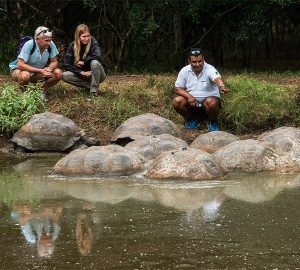
The Galapagos Islands are famous around the world for their extraordinary wildlife. Located nearly 1000 kilometers off the coast of mainland Ecuador, Galapagos is home to species that lived in isolation and adapted to environments found nowhere else on the planet.
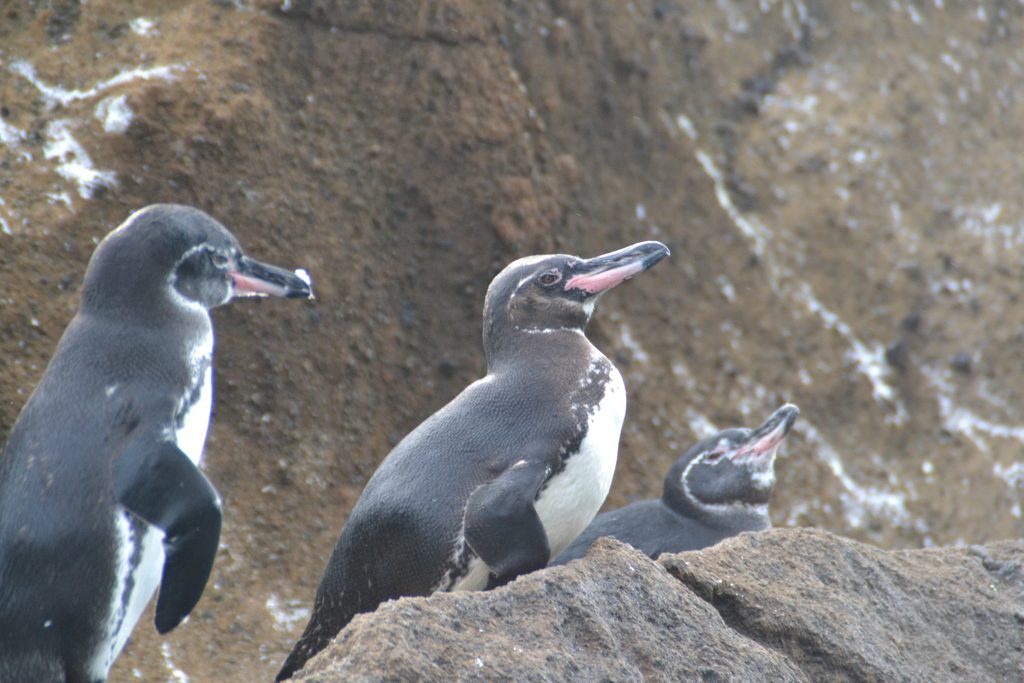
From giant tortoises and marine iguanas to penguins living on the equator, Galapagos animals are unique wildlife you will encounter nowhere else.
For travelers who love nature and animals, a visit to the Galapagos is a unique opportunity to observe endemic species in their natural habitat, often just a few meters away.
Here are 10 remarkable animals you can see only in the Galapagos Islands.
1. Galapagos Giant Tortoise
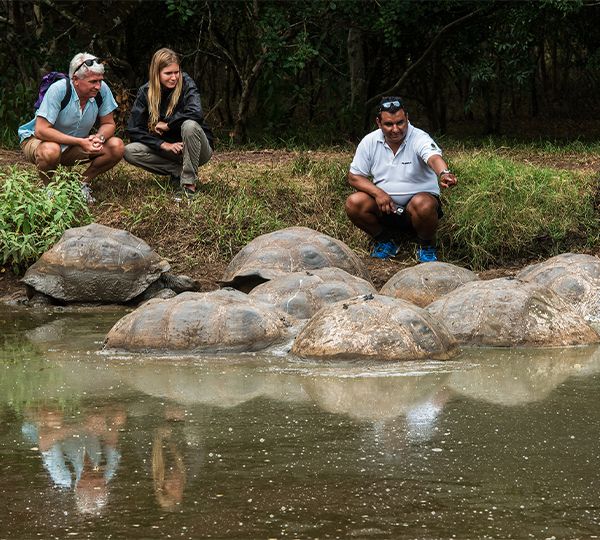
The Galapagos giant tortoise is probably the most iconic of all Galapagos animals.
These enormous reptiles can weigh more than 200 kilograms and live for well over 100 years. Different populations evolved on different islands, resulting in variations in shell shape, size and appearance.
Where you can see them: Santa Cruz, Isabela, San Cristobal and several other islands.
2. Marine Iguana
An unusual representative of reptiles lives in the Galapagos Islands. Most of the lizards we know prefer to inhabit forests, mountains, deserts, but among the 3000 species, only one – the Galapagos marine iguana – can be considered a real marine animal. Although its appearance does not meet model standards, it is ideally suited for survival on volcanic shores.
Unlike other iguanas, the marine iguana has a huge tail flattened from the sides and membranes between the fingers. With such an upgrade, the lizard swims perfectly, bending its body from side to side. To prevent excess of sea salt from creating discomfort, it has special glands on the head to release fluid.
Where you can see them: throughout the Galapagos Islands.
3. Galapagos Penguin
4. Flightless Cormorant
American and Chilean biologists have discovered how the Galapagos flightless cormorant lost its ability to fly. Representatives of this species have changed the functions of proteins that regulate the growth or work of cilia (cilia – important cellular organelles), and the absence or poor functioning of cilia can affect bone growth. The study is published in Science.
Cormorants (Phalacrocorax) are waterfowl of the size of a duck or a goose, which inhabit colonies in coastal areas. Now there are about 40 species of cormorants on the planet, the only flightless of them is the Galapagos cormorant (Phalacrocorax harrisi). Their wings are shorter than those of other species, and the chest is flatter. At the same time, phylogenetic studies have shown that, unlike penguins and ratites, (ostriches, rheas, kiwi), which lost their ability to fly about 50 million years ago), the Galapagos cormorants “lost” most of their wings about two million years ago, by evolutionary standards it happened recently. Therefore, according to scientists, a fresh example of P. Harrisi can be used to study how birds lose their ability to fly.
Where you can see them: Isabela and Fernandina.
5. Galapagos Sea Lion
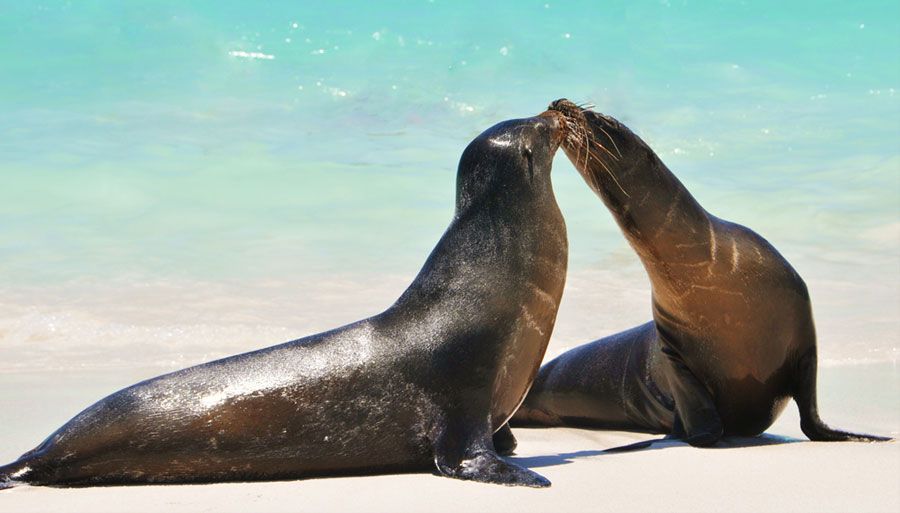
The Galapagos sea lion are very entertaining and funny animals. You can see them resting on beaches, swimming near boats and playing in shallow coastal waters. Young sea lions are particularly curious and may approach swimmers and snorkelers.
Watching a sea lion glide effortlessly through the water just a few meters away is one of the memorable wildlife encounters of a Galapagos trip.
Where you can see them: throughout the archipelago.
6. Galapagos Fur Seal
Galapagos fur seal (lat. Arctocephalus galapagoensis) is a species of eared seals from the subfamily of fur seals. Belongs to the genus of southern fur seals. You can spot them in the Galapagos national park.
Galápagos fur seals are the smallest otariids. They are born with a black natal coat that they molt to reveal a lighter brown coat before becoming adults. Galápagos fur seals display sexual dimorphism. The males are up to 2x heavier than the females and 1–1.3 times longer. Males grow to be 1.5 m (5 feet) on average and weigh about 64 kg (140 lb). Females grow to be 1.25 m on average and weigh 27 kg (60 lb).
Where you can see them: particularly around Fernandina and Isabela.
7. Waved Albatross
The largest bird found on the Galapagos is the waved albatross. It’s also the only species of albatross found entirely in the tropics. Though the species soars over long distances, it breeds exclusively on the Galapagos Islands.
You should look for particular Galapagos islands itinerary to spot them. We’ll be happy to help you to choose the best Ecuador Galapagos islands tour.
Where you can see them: Española Island. You can see them generally from April to December, during the breeding season.
8. Galapagos Land Iguana
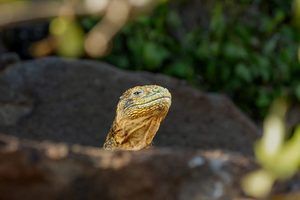
The Galapagos land iguana is a large, yellowish reptile found only in the Galapagos Islands.
Unlike marine iguanas, land iguanas spend their time on land, feeding primarily on vegetation. They are particularly well adapted to the dry, volcanic landscapes found on several islands.
Where you can see them: Santa Cruz, South Plaza, Isabela and other islands.
9. Galapagos Hawk
As the only diurnal raptor to inhabit the islands, the Galapagos hawk is hard to miss. Though it mostly preys on small animals such as locusts, centipedes and lizards, this raptor is a top predator and has been known to swoop down on iguanas and giant tortoise hatchlings.
You can spot them during your Galapagos islands Ecuador vacation. Ask us for cruises to Galapagos islands Ecuador.
Where you can see them: Isabela, Santiago, Española and several other islands.
10. Galapagos Lava Lizard
One of the most common animals found on the Galapagos are the islands’ small lizards, often affectionately referred to as “lava lizards.” There are at least seven recognized species, each with unique traits. Like with the Galapagos’ finches, the variety of species of lava lizards represent a remarkable example of adaptive radiation.
You can spot them during your Galapagos cruise holidays. We’ll be happy to organize your Galapagos adventure.
Where you can see them: on several islands throughout the Galapagos.
Why is Galapagos wildlife so unique?
The incredible diversity of Galapagos wildlife is largely the result of geographic isolation.
The islands are located far from mainland South America, so species that arrived millions of years ago evolved in relative isolation. Over time, they adapted to the specific conditions of individual islands.
Ready to discover the incredible animals of the Galapagos? Explore our Galapagos cruises and start planning your wildlife adventure.